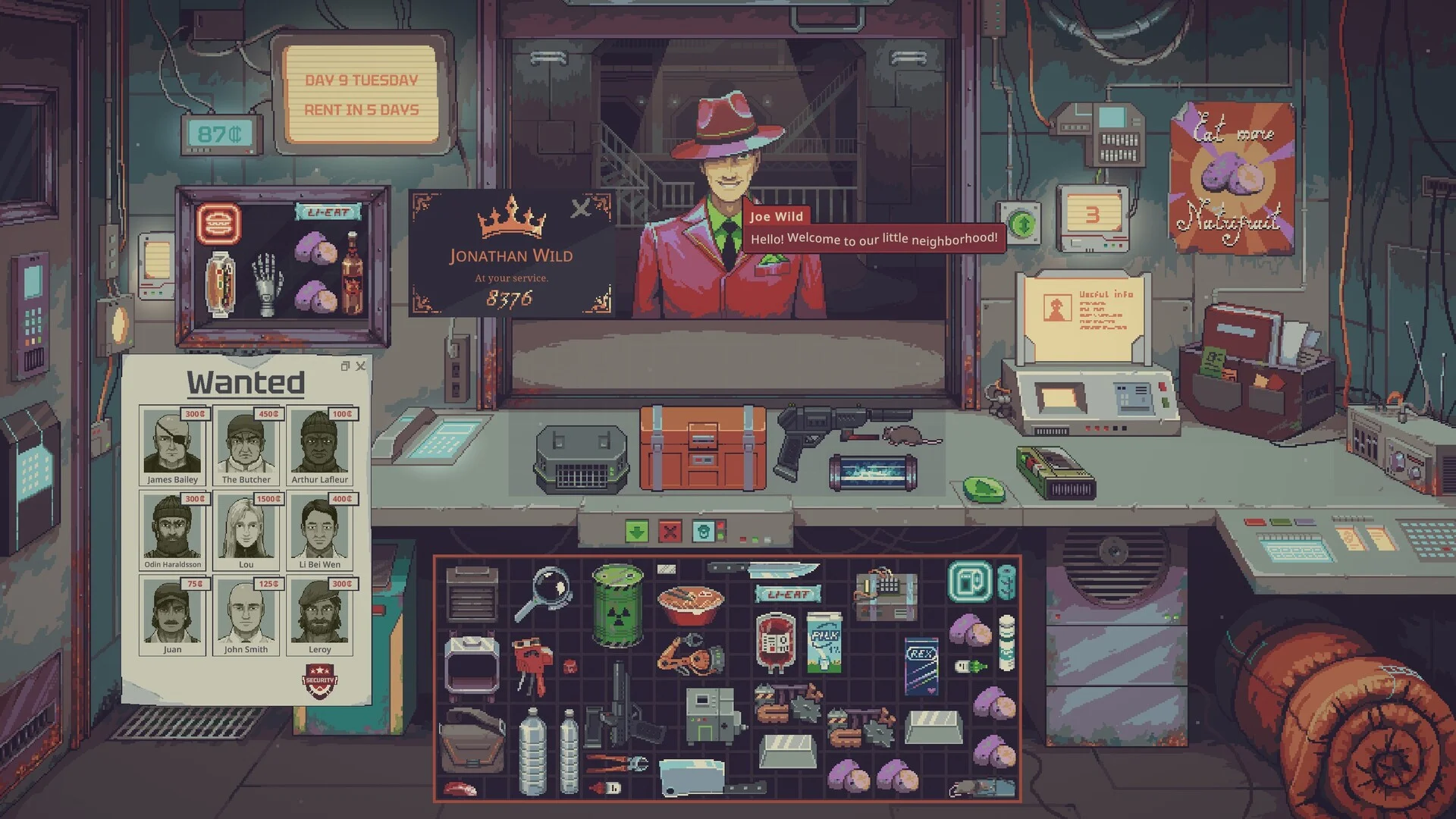
- Probably Stolen items carry a Heat stat that flags them as stolen goods on your shelves.
- Use the magnifying glass to inspect lettering, seals, and fonts before closing any deal.
- Stash hot goods in storage, not the display case, until you can offload them safely.
- Market events like material surplus cycles are your best windows for bulk flipping.
- Rent arrives weekly — always keep a cash buffer above the rent threshold.
Understanding Probably Stolen Items and Heat
In Probably Stolen, every item that passes through your shop has a story — and some of those stories involve the lower levels' thriving black market. Items marked as stolen carry a Heat percentage (for example, "Stolen, 25% Heat"), which represents the legal and reputational risk of holding or reselling them. Heat items sell fast and often at a discount, but attracting the wrong attention can cost you far more than the profit.
The core tension of the game is exactly this: scavengers, revolutionaries, and random drifters will offer you questionable goods at bargain prices, while security officers patrol your storefront and conduct routine inspections. Your job as the shopkeeper is to decide when to play clean and when to take the risk.
Video Highlights:
- A full early-game run built around buying discounted, possibly stolen stock
- Live counterfeit inspection of cigarettes and food stamps using the magnifying glass
- Turning in a wanted revolutionary for a 300-credit bounty
- Market timing with material surplus and household goods price drops
Never place stolen or high-Heat items in your display window. Displayed goods attract buyers — including security inspections. Keep contraband in your storage bay until a buyer who "doesn't care about contraband" shows up.
Counterfeit Inspection: How to Verify Items
Not every suspicious item is stolen — some are counterfeit. The appraisal system lets you examine documents, stamps, and packaged goods letter by letter. Getting this right is the difference between flipping a genuine 40-credit food stamp at full value and getting stuck with worthless paper.
| Check Point | Genuine Signs | Counterfeit Signs |
|---|---|---|
| Lettering | Correct spelling, clean font | Incorrect spelling, wrong font |
| Seal | Crisp, properly aligned | Smudged or misplaced |
| Chip / Print | Sharp detail | Blurry or shifted print |
| Box Condition | Unbroken, intact | Tampered, resealed |
| Stated Value | Matches market price | Too good to be true |
Joining the Appraiser Board (offered by a visiting board member early in your run) unlocks appraisal services: a base service fee plus a bonus based on the appraisal itself. This turns your shop into a legitimate income stream and rewards careful inspection.
Documents like the cybernetic hand appraisal guide teach you the correct spellings and fonts for specific item types. Hold onto these — they make future inspections nearly automatic.
Who Buys and Who Sells: Customer Types
Your daily customer queue is a rotating cast of faction-aligned NPCs, each with distinct buying habits and risk tolerance.
Scavengers & Miners
- Sell scrap, ore, junk
- Accept wholesale bulk deals
- Great source of furnace fuel
Revolutionaries
- Want guns, ammo, armor, meds
- Often ignore contraband status
- Buying from them hurts security reputation
Security & Officers
- Buy food, treats, medical supplies
- Boost security reputation
- Trigger inspections — keep shelves clean
Hydroponic Farmers
- Sell neutrafruit and seeds
- Discount on bulk produce buys
- Reliable early income
Addicts & Wanderers
- Seek narcotics, alcohol, cigarettes
- Pay heavy markups (50%+)
- Reputation consequences vary
Doctors & Suppliers
- Sell machines, modules, energy cells
- Offer "special friend" discounts
- Key to furnace upgrades
| Customer Type | Best Item to Sell | Risk Level | Notes |
|---|---|---|---|
| Revolutionary | Medical supplies, weapons | High | Faction reputation shifts |
| Security officer | Food, toothpaste, meds | Low | Builds security standing |
| Addict | Cigarettes, substances | Medium | Up to 50% markup |
| Scavenger | Junk (bulk) | Low | Clears inventory fast |
| Fellow merchant | Overstock anything | Low | ~15% discount on buys |
Wanted criminals like Odin or Juan may walk into your shop. Reporting them triggers an arrest and deposits a bounty (300+ credits) directly into your account — at the cost of revolutionary reputation.
Step-by-Step: Your First Profitable Week
Set Up Safe Perks
Choose perks that protect you early: reduced night robbery risk and increased luck. Skip addiction perks unless you want self-imposed hard mode.
Buy Wholesale, Inspect Everything
Accept bulk discounts from farmers and scavengers, but run the magnifying glass over stamps, seals, and lettering before paying.
Build the Furnace Loop
Buy a furnace from Dr. Jackson, feed it scrap and ore, and smelt low-value metal into higher-purity ingots. High-purity ingots can nearly double the input value.
Time the Market
Read the daily newspaper. When a material surplus is announced, materials crash in price for one day — buy everything, then sell after prices recover.
Cover Rent, Then Take Risks
Rent climbs weekly (200, then 209+). Once the buffer is secured, start flipping stolen and contraband goods to tolerant buyers.
What you place in the display case determines whether customers buy or sell that category. Rotate stock daily: display materials on surplus days to buy cheap, display household goods on relief days to sell high.
Scavenging Runs and Daily Routine
The wasteland outside your shop — mainly the dumping grounds — offers free loot with injury risk. A scavenging run can yield scrap, screwdrivers, plasma cutters, bandages, and even ice cream. Upgrading from the fanny pack to a large backpack dramatically increases haul capacity.
| Location | Loot Quality | Injury Risk | Best For |
|---|---|---|---|
| Dumping Grounds | Medium | ~9% per attempt | Junk, tools, food |
| Commissary | Low (trade only) | None | Water rations, food stamps |
| Abandoned Sections | High | Higher | Weapon parts, gear |
| Doctor Jackson | Vendor | None | Furnace, modules, cells |
Daily Routine Checklist:
- Read the newspaper and check the calendar for market events
- Set display case to buy or sell mode for today's price swing
- Inspect all incoming wholesale goods for counterfeits
- Smelt scrap into ingots when the furnace has fuel and energy
- Keep cash above the weekly rent threshold before risky deals
Pay the power bill and consider janitorial service. Burglars grant a few nights of grace early on, but neglected shops attract crime, and unpaid power triggers blackouts that stall production.
FAQ
Q: What does the Heat stat on Probably Stolen items actually do?
Heat marks an item as stolen. Selling or displaying Heat items can draw security attention and inspections, but buyers who explicitly ignore contraband — like revolutionaries and certain agents — will take them at good prices.
Q: Should I report wanted criminals who visit my shop?
Early on, yes. Bounties of 300+ credits are a major cash injection when you are struggling to pay rent. The cost is revolutionary faction reputation, so stop reporting them once you rely on revolutionary customers.
Q: How do I tell if a food stamp or document is counterfeit?
Inspect it with the magnifying glass and check lettering, seals, font, and stated value against the correct form (found in appraisal guides). Wrong spelling or incorrect fonts confirm a fake.
Q: Is the furnace worth the early investment?
It is expensive with the supplier markup, but converting scrap and ore into high-purity metal ingots can nearly double the value of raw materials, making it one of the strongest early-game income loops.