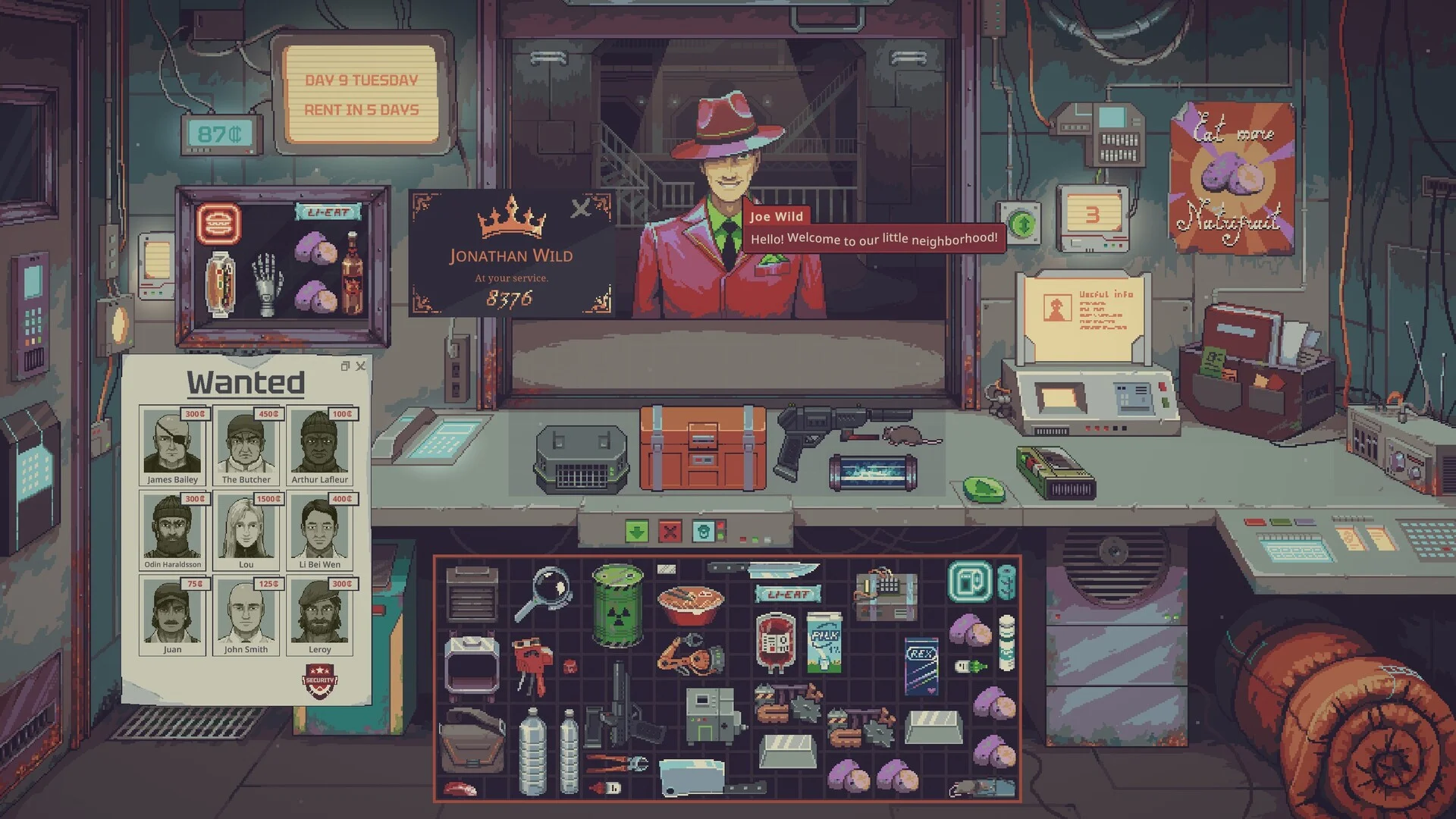
- Wine making is one of the most reliable long-term income sources in Probably Stolen
- Bottles age over time: wine gains value the longer you hold it after fermentation
- Core ingredients: fruit (grapes, bloomberry, blueberry), yeast, and 750 ml of water per bottle
- Luxury wine made from excellent-quality fruit can sell for 175+ credits
- Water shortages raise input costs, so stockpile sealed water when it is cheap
Wine Making Overview: Why Fermenting Prints Credits
Wine is a standout commodity in Probably Stolen because it behaves differently from household goods or medical supplies: instead of losing value or staying flat, a finished bottle appreciates as it ages on your shelf. That makes it both a product and an investment. A bottle brewed from cheap underripe fruit may only be worth a modest amount at first, but given enough in-game days it can outgrow far more expensive stock.
Beyond selling, wine fills another niche: customers labeled as looking for "something to ease the tension" or "substances" are frequent visitors, and wine is often the only item in your inventory they will actually buy at a strong price.
Video Highlights:
- A full month of gameplay centered on building a wine side business alongside household goods trading
- Demonstrates the 750 ml water requirement, yeast sourcing, and fermentation batches
- Shows luxury wine reaching 175 credits and aged bottles climbing past 190
- Covers complementary income: scavenging, GP Mining ore orders, and ingot smelting
Do not rush to sell fresh bottles. Every bottle you ferment keeps gaining value, so only list wine when rent is due or a high-budget "tension" customer walks in.
Ingredients, Recipes, and Water Management
Every bottle of wine requires three inputs: a fruit, yeast, and 750 ml of water. Fruit quality is the single biggest driver of the final product tier, and yeast is optional for fermentation speed and quality but does not need to be doubled.
Recipe Reference Table
| Fruit Quality | Typical Result | Est. Sale Value | Notes |
|---|---|---|---|
| Underripe berries | Basic wine | Low (weak old wine tier) | Only worth it with free/cheap surplus fruit |
| "Fine" grapes | Standard wine | Mid-range | Good bulk option when grapes are discounted |
| Fantastic grapes | Luxury wine | 175+ credits | Best profit per bottle; buy in bulk from the retired winemaker |
| Bloomberry (double) | Quality wine | Mid-to-high | Solid when grapes are out of stock |
| Blueberry | Blueberry wine | ~174 credits | Reliable seller with strong demand |
Water and Supply Considerations
- Each bottle needs 750 ml of water, so water price directly cuts into margins.
- During the water supply crisis, purification items and sealed water spike in price; buy spring water ahead of shortages.
- A water filter or purifier setup lets you stretch cheap base water further instead of buying premium sealed water.
When the station announces a water shortage event, hold your wine inventory and delay brewing. Brewing during a crisis means paying inflated water prices for a bottle that will appreciate anyway, so waiting costs you nothing.
Testing one yeast versus two yeast in identical batches produced equal-quality wine. One yeast per bottle is sufficient; spend the extra credits on better fruit instead.
Step-by-Step: Your First Wine Batch
Source Fruit Cheaply
Watch the retired winemaker's visits and market cycles. Buy fantastic grapes when discounted, and snap up underripe bloomberry only as a speculative hold, since it may ripen on your shelf.
Stockpile Water and Yeast
Keep at least 750 ml of sealed water per planned bottle plus a buffer. Yeast is frequently cheap; buy several whenever the price dips.
Ferment the Batch
Combine one fruit, one yeast, and 750 ml of water. Prioritize excellent-quality fruit for luxury tier output and let fermentation run overnight.
Age the Bottles
Leave finished bottles in storage rather than listing them immediately. Wine value climbs each day, so aging is free profit.
Sell to the Right Customer
List wine when a "long haul" or "ease the tension" customer arrives. If their budget is slightly below your price, a small discount can paradoxically increase total revenue by unlocking a larger budget bracket.
Offering a 1-credit or small percentage discount can shift a customer's effective budget upward. A 196-credit bottle sold at a slight discount can outearn holding out for a full-price sale to a broke customer.
Wine vs. Other Income Streams
Wine rarely carries a shop alone in the early weeks, but it pairs extremely well with slower-turnover goods and crafting loops.
Wine Aging
- Appreciates over time
- Low ongoing cost after setup
- Sells to substance-seeking customers
Household Goods
- Buy cheap, hoard, sell at markup
- High customer demand variety
- Needs storage space management
Ore Smelting
- GP Mining bulk ore + flux agent
- Furnace converts 6 junk into 4 scrap/ingots
- High-purity ingots sell to material buyers
Income Stream Comparison
| Stream | Startup Cost | Profit Ceiling | Risk |
|---|---|---|---|
| Wine aging | Low (yeast, water, fruit) | High, scales with patience | Low; needs aging time |
| Household flipping | Low | Medium | Low; price cycles |
| Ingot smelting | Medium (furnace, flux, ore) | High | Medium; contact availability |
| Stolen goods | None | Varies | High; attracts heat, wrecks black market rep |
Sellers like Giorgio periodically offer stolen or contraband items. These carry "heat" that draws security attention and damages reputation. The perfume and toothpaste side of his inventory is safe; the stolen portion is not.
Weekly Wine Business Checklist
Wine Shop Milestones:
- Secure 750 ml sealed water per planned bottle plus buffer
- Buy fantastic-quality grapes at discount from the winemaker
- Ferment at least one luxury-tier bottle per week
- Hold finished bottles for aging instead of quick-selling
- Cover weekly rent before indulging in speculative purchases
Key Budget Benchmarks
| Goal | Credits | Priority |
|---|---|---|
| Weekly rent (early) | ~200-290 | Critical |
| Trading permit (upcoming) | ~1,500 | High, plan weeks ahead |
| Buy referral from Dr. Jackson's network | 200 | Medium |
| Backpack for scavenge capacity | ~130+ | High quality-of-life |
Always lock in rent credits before aging inventory tempts you into new brewing spending. A valuable bottle collection means nothing if the landlord visits while your credits are tied up in fermentation.
FAQ
Q: Does wine in Probably Stolen keep gaining value forever?
Wine appreciates as it ages, and in practice bottles climbed from roughly 144 to 190+ credits over the course of a month. Age your bottles as long as your cash flow allows, but sell before you risk missing rent.
Q: How much water does one bottle of wine need?
Each bottle requires 750 ml of water. Base water works, but sealed or purified water produces cleaner results. Stockpile water before announced supply crises to protect your margins.
Q: Is more yeast better for wine quality?
No. Side-by-side batches with one yeast versus two yeast produced equal-quality wine. One yeast per bottle is enough; invest the savings in higher-quality fruit like fantastic grapes.
Q: Which fruit makes the best wine?
Fantastic-quality grapes reliably produce luxury wine selling for 175+ credits. Blueberry wine also performs well at around 174 credits, and double bloomberry is a solid fallback when grapes are unavailable.