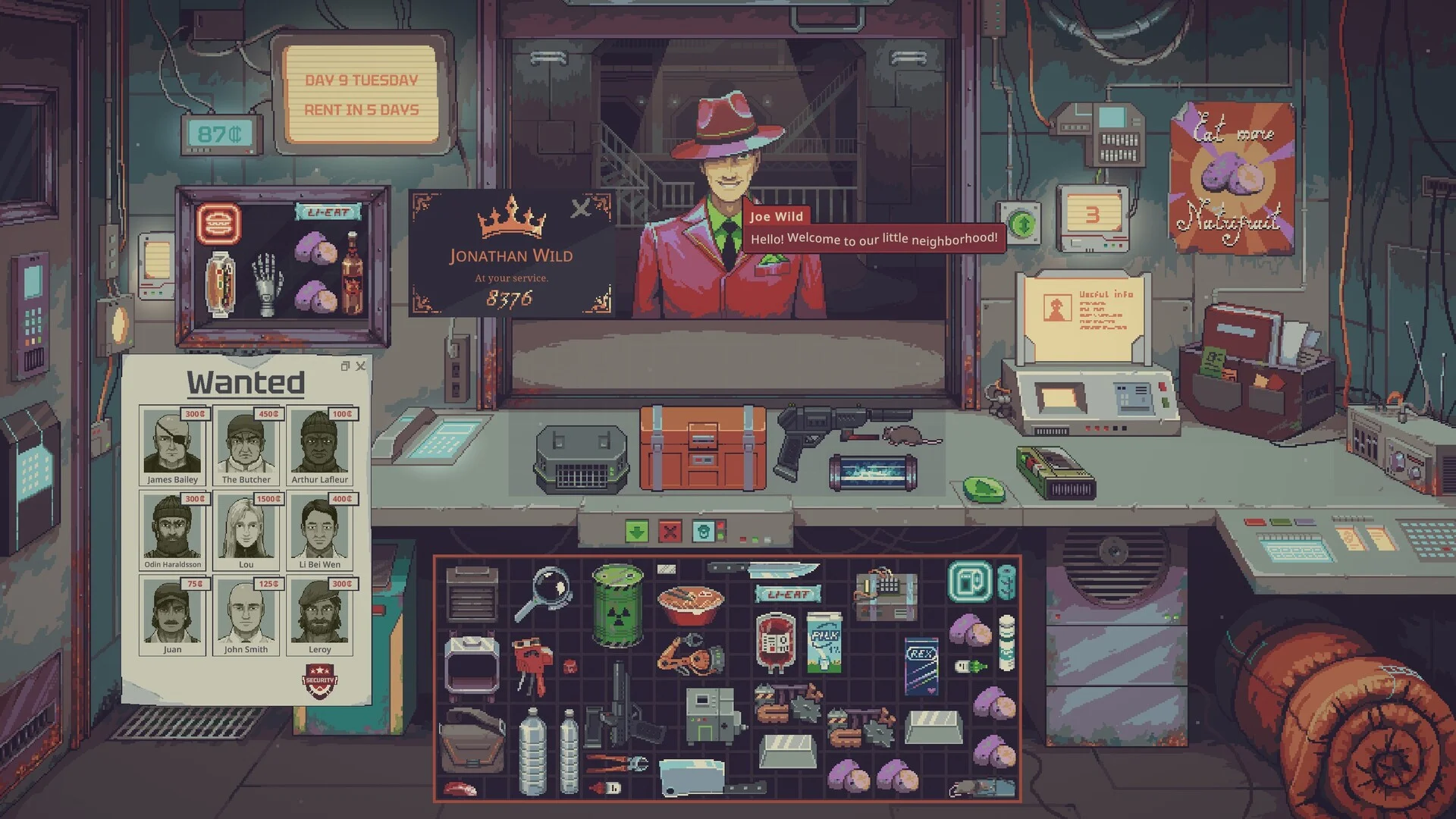
- Probably Stolen how to buy shop stock starts at the negotiation counter—drag items there to purchase.
- Food first: food is the most traded commodity and spikes during shortages.
- Wholesale deals (25-50% off) are your best buying tool—take the whole lot when profitable.
- Never buy contraband openly; it must stay off the counter to avoid reputation loss.
- Budget around rent: 200+ credits weekly, so keep a cash cushion before bulk buying.
Buying Basics: How the Shop Counter Works
In Probably Stolen, your station-side store runs on a simple loop: customers walk up, you drag their items to the negotiation counter, and a buy or sell button appears if the deal is possible. Clients only carry a limited budget, and your outgoing sales automatically include a retail markup (roughly 15% on routine goods), so your profit lives in the spread between what you pay and what you charge.
Video Highlights:
- First-week gameplay covering counter setup, buying, and mentor tips
- Food and beverage demand drives most early sales
- Wholesale lots and counterfeit inspection demonstrated in real time
- Insurance, scavenging, and night-market options explained
When buying, watch three numbers on every item: the base value, the estimated value, and the customer's remaining budget. If a customer cannot afford your price, sell them something cheaper rather than losing the sale entirely. Variety matters too—many buyers apply a variety bonus or restriction, refusing to purchase duplicates of the same item.
| Buying Concept | What It Means | Practical Rule |
|---|---|---|
| Negotiation counter | Drag items here to enable buy/sell | Keep both sides of the counter clear |
| Client budget | Hard cap on what a customer can spend | Downsell to affordable items |
| Retail markup | Auto-applied on your sales (~15%) | Buy below base value when possible |
| Variety restriction | Some buyers refuse duplicates | Stock diverse goods, not duplicates |
| Category demand | Customers ask for food, materials, tools | Check what's requested before opening |
The tutorial merchant tells you plainly: keep both sides of the counter clear so customers have room to sell. Items left outside overnight invite theft—unless you deliberately want bait out for thieves.
What to Buy First: Priority Stock List
You start with around 500 credits and rent of roughly 200 credits due in six days, so your first purchases must be disciplined. Food is the anchor: everyone has to eat, and food and water prices spike sharply during shortages, letting you sell stocked goods at a premium.
Recommended early buying priorities:
| Priority | Item Category | Why Buy It | Resale Potential |
|---|---|---|---|
| 1 | Food & beverages | Highest demand, shortage spikes | ★★★★★ |
| 2 | Household goods | Steady demand from lower-level citizens | ★★★☆☆ |
| 3 | Materials & tools | Lower-level repairmen buy regularly | ★★★★☆ |
| 4 | Scrap metal | Smelt into ingots overnight for profit | ★★★★☆ |
| 5 | Medicine & bandages | Useful for night scavenging, sellable | ★★★☆☆ |
Food Strategy
- Buy broadly: juice packs, canned goods, soda
- Soda counts as both food and beverage
- Stockpile before announced shortages
Materials Strategy
- Buy wholesale scrap lots at 30%+ off
- Smelt overnight into ingots
- Sell to repairmen and engineers
Household Strategy
- Buy during relief drives when prices dip
- Sell after the event ends for full value
- Avoid double-stocking duplicates
Rent arrives weekly (around 200-209 credits and rising). Never spend down to zero on stock—if you miss rent, the run gets much harder. Keep at least one rent payment in reserve at all times.
Step-by-Step: Buying From Customers
Buying in Probably Stolen follows a repeatable daily rhythm. Master this sequence and the credits stack up quickly.
Open the Shop and Greet
Check your display case before opening the shutter—stocking it attracts specific buyers. Set up everything before the first customer enters.
Drag Items to the Counter
Hold left mouse and drag to select multiple items. A buy/sell button appears only when the deal is valid for that customer's budget.
Inspect Before Buying
Use the magnifying glass on inspectable items and compare against the handbook. A single discrepancy—wrong logo, broken seal—lets you confront the seller for a lower price, often 15% off.
Accept Wholesale Offers
When a seller offers a bulk deal ("32% off if you take it all"), accept when the total is within budget and the category sells well. These lots are your main margin source.
Close, Scavenge, Restock
After closing, visit the dumping grounds with a bandage (5% minor wound chance, 1% major per scavenge). Return, sleep, and repeat with fuller shelves.
Only confront a seller when you can actually point to a discrepancy. Falsely accusing a customer drops your reputation, which hurts traffic and future deals.
Advanced Buying: Labels, Fakes, and Risky Deals
Once counterfeit shipments start circulating, buying gets more interesting. Certain items are inspectable—compare the logo, seal, and packaging against the handbook reference. Counterfeit cigarettes, for example, often have a missing cross detail in the emblem or a broken security seal.
Advanced options unlock further layers:
| Mechanic | How It Works | Risk Level |
|---|---|---|
| Labeler | Relabel counterfeit goods as genuine for a higher price | High—security knows common frauds |
| Tourist sales | Tourists and upper citizens rarely check authenticity | Medium—word spreads eventually |
| Stolen goods | Thieves sell "hot" items cheap, need fast resale | High—security may raid |
| Contraband on counter | Placing it visibly loses reputation instantly | Never do it |
| Joe Wild's informant | Nightly fee warns you of incoming inspections | Worthwhile if fencing |
Small business insurance costs a small nightly fee, but burglaries are real—one stolen haul can wipe out your most valuable scavenged items. Pay the insurance every night unless the premium becomes unreasonable.
Key display case rules: items placed inside attract specific clientele, and neon signs attract sellers rather than buyers. Never keep contraband in the display case, or security will arrest you on sight.
Week One Buying Checklist
First-Week Buying Milestones:
- Make your first counter purchase (food or beverage)
- Accept at least one wholesale lot at 30%+ discount
- Correctly identify a counterfeit via inspection
- Keep rent reserve above 200 credits at all times
- Buy nightly insurance before sleeping
- Purchase a furnace-compatible energy cell for smelting
A solid first week typically nets several hundred credits in profit while building a diverse stock base. Focus on the food-and-materials loop, then expand into smelting and label plays once cash flow stabilizes.
Use the daily newspaper and mentor rumors—like an incoming mining expedition flooding the material market—to time your bulk buys. Buy when supply spikes and prices fall, sell when shortages hit.
FAQ
Q: How do I buy items in Probably Stolen?
Drag the customer's item to the negotiation counter. If your budget and their offer are valid, a buy button appears. Clients have limited budgets, so price sensibly or downsell to cheaper goods.
Q: What is the best thing to stock early?
Food and beverages. Food is the most traded commodity on the station, and prices spike sharply during shortages, letting you sell stockpiles at a premium.
Q: Should I accept wholesale offers?
Usually yes, if the discount is 25-50% and the category has steady demand. Wholesale lots are your main source of margin—but keep enough credits for weekly rent (around 200 credits).
Q: Can I relabel counterfeit goods and sell them?
Yes, with the labeler. Tourists and upper-level citizens rarely verify authenticity, but security officers and scavengers know common frauds. Failed scams cost reputation, and eventually people find out.